Stories and Reflections from Siliguri
This page is dedicated to Siliguri, my home. A place that’s both familiar and full of surprises—where every lane holds a story and every change invites a closer look.
Why Hill Cart Chronicles? Because every city has a road that remembers. In Siliguri, that road is Hill Cart Road. It winds through the town like an old, somewhat frayed, thread, winding through markets and memories, cinema halls and rickshaw honks, tea shops and addas. It’s the road that took people to the hills and brought them back changed. The road of arrivals, departures, and everything in between.
Born and brought up in Siliguri, I never imagined I’d end up living here again. A traveller and wanderer at heart, I went wherever life took me, until it flung me right back to the place I thought I’d left behind. But the journey wasn’t a waste. Coming back let me rediscover Siliguri—not just the town, but the region around it, with all its complexities.
There’s no other place quite like this in India. Shaped by its international borders and squeezed between political fault lines, it’s only recently that the rest of the country has begun to pay attention, thanks to the strategic importance of what’s famous as India’s Chicken Neck. But for those of us who live here, Siliguri has always been more than a corridor. It’s a lived space. A layered one.
Now, raising a family here, I see a town in transformation. Did I say “town?”. Sorry, “city” it is. The city is building at breakneck speed—flyovers, malls, gated colonies. The past is vanishing quietly, with few people stopping to notice. Everyone’s in a rush to “make progress.” Few pause to ask: progress towards what?
Hill Cart Chronicles seeks to document the city’s change, to write about heritage, development, and the small things in between. It’s a space for opinion, concern, curiosity. More than that, this blog series is my attempt to capture what survives in memories, in scraps, and in stories. It is a hometown memoir in fragments: part oral history, part personal essay, part record of a city often overlooked, often misunderstood.
I’m afraid it might be a little random—like me.
So, drop by. Read, share, write in. Help me build a space for nostalgia and joy, concern and laughter, memory and hope.
=================================================================
Siliguri Through Time: A Railway Enthusiast’s Nostalgic Journey
About two years ago, my social media feeds were suddenly abuzz with the news of events around a children’s book on the Darjeeling Himalayan Railway, Baby Sivok, written by David Charlesworth, a UK-based railway enthusiast. The tiny engineering marvel of a railway has had a soft spot in my heart ever since my days at The Telegraph. As a cub reporter, I wrote so much about it that I almost turned it into a legit reporter’s beat. Many call it the “Toy Train,” which I think is wrong, given that it is anything but a toy: it is a living monument, recorded as a World Heritage Site by Unesco.
I chased DHR stories even as a freelancer afterwards. While at Oxford, I once landed up in the yard of the late Adrian Shooter in the village of Steeple Ashton village in the United Kingdom, just to admire his garden railway that the former director of Chiltern Railways had built with a DHR locomotive sourced from a museum in Chicago. I even went to Leighton Buzzard to see how the rail enthusiasts in the UK had converted one of their stations into an Indian station and indulged in vicarious pleasure by running steam rides using Shooter’s DHR locomotive. You have to read my stories here and here to know all about it.
So, it’s no surprise that I got really excited that someone had written a book for children on the DHR. And that too by someone whose love for steam and all things heritage runs really deep.
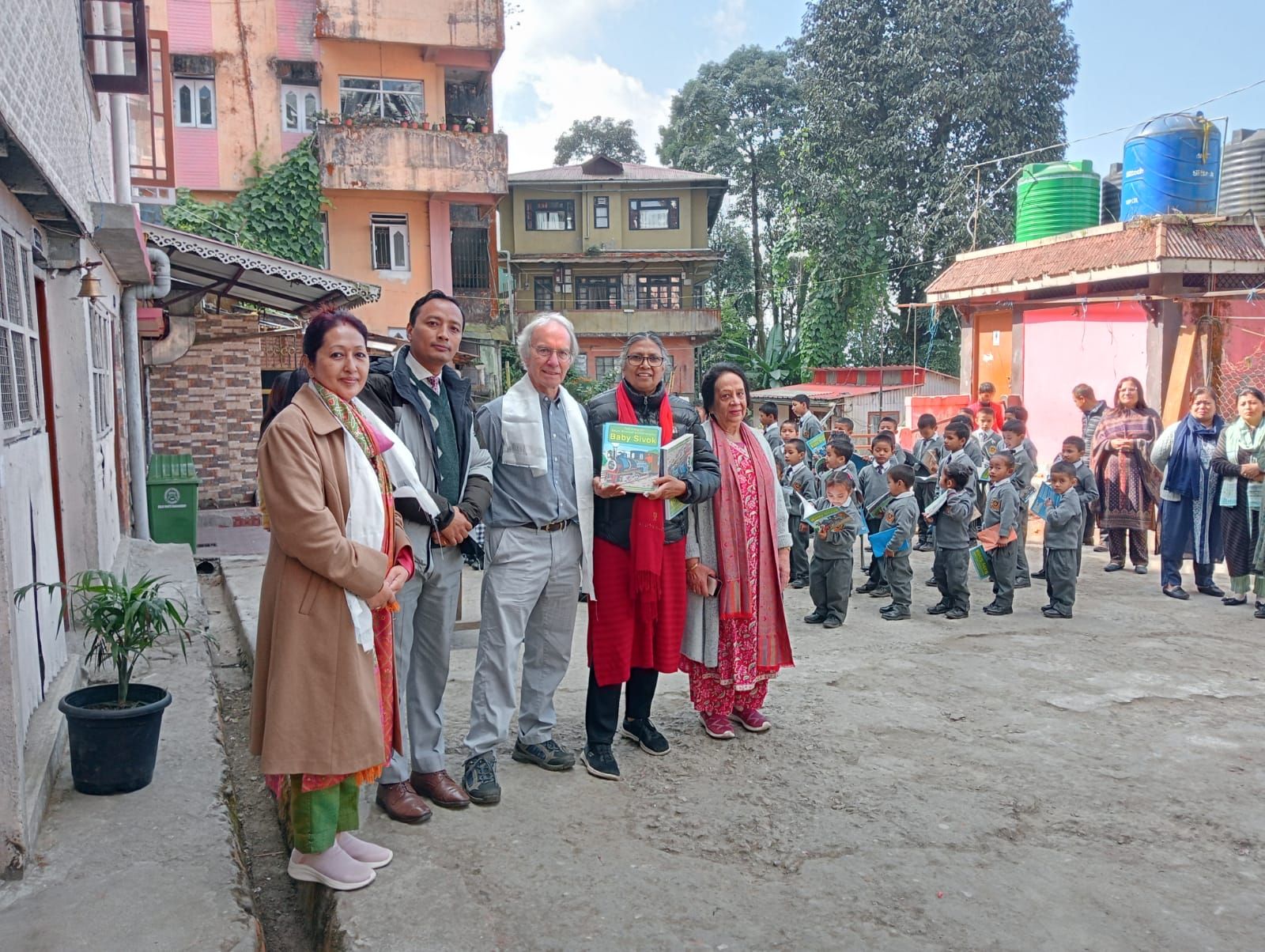
David Charlesworth is a UK-based artist who apparently began drawing recognisable trains and aircrafts “even before the age of three”. An artist, designer and huge enthusiast for transport history, he has spent much of his life documenting railways through paintings, illustrations and books. He’s also the founder member of Darjeeling Himalayan Railway Society. I have known him since my days at The Telegraph, I could fish out one story from 18 years ago in which i have quoted him. In fact, I recently found a story from eighteen years ago in which I had quoted him.
There’s a lot to say about his book and I shall do so in another post. That’s because its revised edition is now being published by Foothills Publishing, which is also my publisher. It will be launched soon, and I will tell you more about it then.
For now, let me share Charlesworth’s note remembering Siliguri. His reflections, that he shared with me over email, capture the town’s transformation from a sleepy rail hub to a bustling modern center. Must pay particular attention to the caveat in the end!
I love the “border town” feel of Siligiri
by David Charlesworth
My first visit to Siliguri was in December 1986; I knew very little about the area at that time, only Darjeeling and this was because my grandfather was there during the Second World War. As I was brought up by my grandparents we had books and photographs that he bought there in 1943. In fact The Oxford bookshop still exists and in the same building on Chowrasta where he bought two of the books I still have. As did most servicemen, DAS Studios, also in Darjeeling, is where he bought photographs showing the amazing DHR and its special locomotives. So I have known about the railway all my life, thus making my first visit very exciting but I wish I’d been better prepared.
This lifetime of awareness revitalised with many pleasant winter evenings of slide shows at the home of my friends Peter and Linda Jordan, is what finally brought me to India.
We arrived on a meter-gauge overnight sleeper train from Jayanagar on the Nepal border via Sakri Junction and Saharsa Junction, which I am sure come through Aluabari Road Junction and Naksalbari into Siliguri Junction from the North end, as I have no photographs or memory of New Jalpaiguri from that trip.
It was early December and the DHR still wasn’t running through trains because of landslides so we changed to a taxi. I have one photograph from Siliguri Junction and that is of a WD 2-8-2 steam engine of the type that is still plinthed outside New Jalpaiguri station. There was a lot of steam around in those days and that was one the main reasons for visiting India; to chase steam locomotives. The other reason was to see the town of Darjeeling that I had heard so much about.
I never saw Siliguri on this first trip, my first impression of the town proper was in 1999. I remember it made me feel like a true adventurer as it was very dark. Street lighting was minimal and there were very few taxis, it was mostly Auto Rickshaws. The town was nothing like the size it is today; no super shopping malls and very few hotels of the standards we see now. Sevoke Road for example, is unrecognisable in comparison.
At the start of the 20th Century, Siliguri was still a village with a population of just over 750. Its importance began with the coming of the Eastern Bengal Railway in 1878 and the transfer of the Deputy Magistrate’s headquarters from Hansquar, near Phansidewa in 1881 (O’Malley,1907). The railways often changed the importance of a village or town, indeed, many towns were created just because of the railways; something that is particularly common in the UK where it has left a vast number railway towns devoid of purpose as the railway has now gone. The opening of the Darjeeling Himalayan Railway in 1880 secured the importance and growth of Siliguri.
Since then, Siliguri has continued to grow but a truly significant change has come about since COVID (2020). As a visitor able to come just once a year, I find a staggering difference each visit. Much of it appears good for the town (and indeed India) but as a visitor, the magic of the area is reduced.
I must have made around ten visits to Siliguri, and, apart from 1986, always staying at The Cindrella on Sevoke Road, as they have been good friends for over 25 years and I feel very much “at home” there.
I love the “border town” feel of Siligiri and how close it is to the wildlife parks and open countryside where you can be out of town in a few minutes by motorcycle. For me, the most exciting part is the railway history. Sadly, it has lost the opportunity to be one of the most interesting places on earth for railway enthusiasts: Steam on three gauges was a spectacular event in 2006. Now no longer possible through neglect and lack of understanding, it is a huge loss for the town. We now have to fight to preserve the immensely important memorial to the DHR, Siliguri Town, old station. The area is now in severe decline and having seen the station in use on the DHR side, it is distressing to visit what is now known as the “Siliguri Toilet”.
The new bypass cutting through the town is considered a good thing by many locals but as an outsider, the way it is cutting through with total disregard for its appearance and impact on the environment visually and the poorer businesses and families is sad to see. The new shopping malls are going to hit local traders harder than they can imagine – I have seen it in the UK.
Hill Cart Chatter: “A Unique Place to Live”
Hill Cart Chronicles–Post #5
Welcome to Hill Cart Chatter, a monthly feature under Hill Cart Chronicles. In this space, I chat with people who live—or have lived—in Siliguri. They might be born here, or they might have moved here and never gone back. Some may now live elsewhere, but their hearts still beat for this ever-changing, ever-familiar town. The questions will be a mix—some constants, some variables—and the tone informal. Think of it as adda in slow motion.
Hill Cart Chatter #issue September, 2025

For this issue, I spoke with Sanjana Sodhi Sarkar, president of Niswarth, a non-governmental organisation working to empower underprivileged and disabled people—especially the deaf and mute—in the tea-growing regions of North Bengal and Assam. Niswarth provides training and support across communities and also runs an English-medium school for deaf and mute children at Bagrakote—the only one of its kind in the Dooars—about which I had once written for Gaon Connection. Click here to read the story.
It was while reporting that story that I first met Ms. Sanjana. I came away with deep admiration for her—her strength, resilience, and fortitude, even in the face of personal struggles.
Born and raised in the tea gardens of Assam, she married a professional from the tea industry and lived in the Dooars before moving to Siliguri. She often travels to eastern Dooars where her husband is posted, but Siliguri remains their home. In this city, Ms. Sanjana found her footing and financial independence—first in the motor sector, then in hospital management, working with some of the city’s leading nursing homes—before eventually devoting herself fully to the work of Niswarth.
Here are her thoughts on the city that has become her home:

Which part of Siliguri do you call home? What makes it special?
Barsana Apartments, Matigara. It’s a peaceful neighbourhood with a very cosmopolitan culture.
How long have you lived in Siliguri?
Over 25 years.
What made you come to Siliguri, and make it your home?
Those were difficult times what with the slump in the tea sector. I moved to Siliguri in search of opportunities. In this city, I made a career. It is here that my children grew up. The city had the infrastructure I needed for my daughter who has special needs.
What do you love most about Siliguri? And what would you highlight to someone considering making this city their home?
The climate and weather, and above all, its diversity. There’s a saying in Hindi—anekta mein ekta (unity in diversity). Siliguri is unique, surrounded by four international borders, acting as a feeding point for neighbouring states and countries. We are blessed to be near Darjeeling, Sikkim, and of course the Dooars, which gives us our morning cup of aromatic tea. And Siliguri itself is a transit point to so many beautiful destinations—Bhutan, Sikkim and Darjeeling.
How has Siliguri changed since the time you arrived?
Oh, drastically. Back then there was so much more greenery—paddy fields and gardens. Now it feels like a huge concrete jungle. What used to be a small town is now almost a metro. While congestion has increased, the city also offers better amenities now—with more schools, improved healthcare facilities, and constant growth.
As a car lover, do you still enjoy driving in Siliguri—or does traffic test your patience more than your skills?
Honestly, driving has become a pain. Traffic and congestion have made it much less enjoyable than before.
Given your love for flowers… if Siliguri were a flower, which one would it be?
An orchid. It blooms late and lasts long; resilient and graceful, just like the city.

On Nepali Language Day, Remembering Siliguri’s Fragile Unity
Hill Cart Chronicles–Post #4
Today is Nepali Language Recognition Day, a day that marks the recognition of Nepali as one of India’s scheduled languages. It is a day of pride for millions of Nepali-speaking people in the country—a celebration of their literature, culture, and identity.
But whenever this day comes around, I cannot help but think of Siliguri in 2007, when that very identity was under attack.
I was there on the ground in 2007, reporting as a journalist, when a peaceful rally in support of Indian Idol winner Prashant Tamang spiralled into one of the ugliest episodes of violence Siliguri has ever seen. What began as a protest march ended with chaos. The protesters were attacked, trapped, the army was called in, and an indefinite curfew followed. For at least a couple of days, Siliguri was a city under lockdown, gripped by fear.
If you remember—sometimes I find myself trying to recall the details as if digging through half-buried memories—the violence wasn’t confined to the rally site. It spread to other parts of the district. Nepali-speakers in Siliguri suddenly found themselves at the eye of the storm, facing targeted attacks that were, to many of us watching closely, clearly politically orchestrated. Colleges even went so far as to set different cut-off marks for admissions, designed to keep out “outsiders”—in other words, Nepali-speaking students from the hills. It was one of the most bizarre and disturbing times I have spent in this city.
As a journalist, I usually stay clear of activism. But on that one occasion, I made an exception. I joined what was called a “friendship rally.” I remember Asok Bhattacharya, then the CPM state urban development minister, leading people of various communities down Hill Cart Road, appealing for Nepali-Bengali unity and friendship. Many of my colleagues were there too—journalists, speakers of different languages, walking side by side. It was a heartening gesture. And yet, in hindsight, I’m not convinced he truly walked the talk. Those of us who lived through that time do not recall his role in the conflict, or in the Gorkhaland agitation that followed, as particularly constructive. One cannot forget that he himself had referred to Nepali-speaking demonstrators as “outsiders.”
Fast forward to the present. Recently, news broke of a Nepali-speaking college girl who was subjected to racist slurs by her Bengali landlady. The incident rightly horrified people across linguistic lines, and the authorities moved quickly—the accused were arrested. There was outrage, yes, but thankfully no “law-and-order” situation, as officials like to describe protests. Yet the atmosphere was tense, and this time the fire spread online. Social media brimmed with anger, prejudice, and big feelings—I borrow that phrase from my life as a mother, where in parenting language “big feelings” are often how we describe emotions children struggle to contain.
What struck me was how many voices on these platforms echoed the same tired belief—that Siliguri belongs to “us” and others are “outsiders.” Usually, it is the so-called fringe elements who have the time and inclination to spend their days trolling online, and one could dismiss them as just noise. But the truth is, such sentiments don’t emerge out of thin air. They are reflections of ideas seeded over time.
Not long ago, I heard a major local political leader demand that all signboards (shop names, etc.) in Siliguri be written in Bengali. I can understand where this is coming from. It is a reaction, in part, to the aggressive imposition of Hindi from the Centre, which many states are resisting. But what works in Mumbai, or even in Kolkata, will not work in Siliguri. This town is unlike any other. Its history is layered, and complicated.
I don’t want to launch into a detailed history (who came first and who last) because that would take us too far afield, and it isn’t the point. The point is simple: you are a Siligurian if you live here. You have full rights over this city, regardless of your language or how recently your family arrived. And really, how far back does one go to claim “original” ownership of a place? If we trace history that way, then ultimately, we must all go back to Africa, where the human race itself is said to have originated before migrating across the world.
I am unapologetically pro-migration. I believe that if you arrive from anywhere—even Mars—and make Siliguri your home, you have the same rights as anyone else who lives here.
Because the beauty of Siliguri lies in its people. Nowhere else have I seen such a dazzling mix of linguistic and ethnic diversity in such a compact space. This is what makes the city unique. It has a corner for everyone to feel at home, and that is what I love most about it.
That is also why political leaders must resist the temptation to play games of linguistic imposition. Doing politics over language may fetch short-term gains, but it achieves nothing lasting. On the contrary, it chips away at the very foundations of the city. Siliguri has thrived on coexistence, on interdependence, on its mingling of cultures. To tamper with that is to risk destroying what makes the city special.
The irony, of course, is that such exclusion is not unique to Siliguri. In Delhi, for instance, Bengalis themselves are often labelled “Bangladeshis” and treated as outsiders. If we resent such unfairness elsewhere, we cannot afford to practise the same exclusion here at home. The same holds true for Nepali-speakers and political leaders from the hills who do not miss a chance to get racist when it suits their politics. Remember that bhaiya song? And the “political demand” to change shop names and signages into Nepali? If we end up mirroring the very prejudices we despise, then the whole exercise becomes meaningless.
On Nepali Language Recognition Day, these reflections matter even more. True respect for language comes not from dominance but from the space we create for each other to belong.
Siliguri’s strength lies not in one language, one culture, or one community—but in the shared ownership of all who live here. Any attempt to narrow that definition must be resisted, not with anger, but with a clear reminder: this city belongs to everyone.

Hill Cart Chatter: “You can take yourself out of Siliguri, but Siliguri can never go out of you.”
Hill Cart Chronicles–Post #3
Welcome to the first edition of Hill Cart Chatter, a new monthly feature under Hill Cart Chronicles. In this space, I’ll chat with people who live—or have lived—in Siliguri. They might be born here, or they might have moved here and never gone back. Some may now live elsewhere, but their hearts still beat for this ever-changing, ever-familiar town. The questions will be a mix—some constants, some variables—and the tone informal. Think of it as adda in slow motion.
Hill Cart Chatter #issue August, 2025
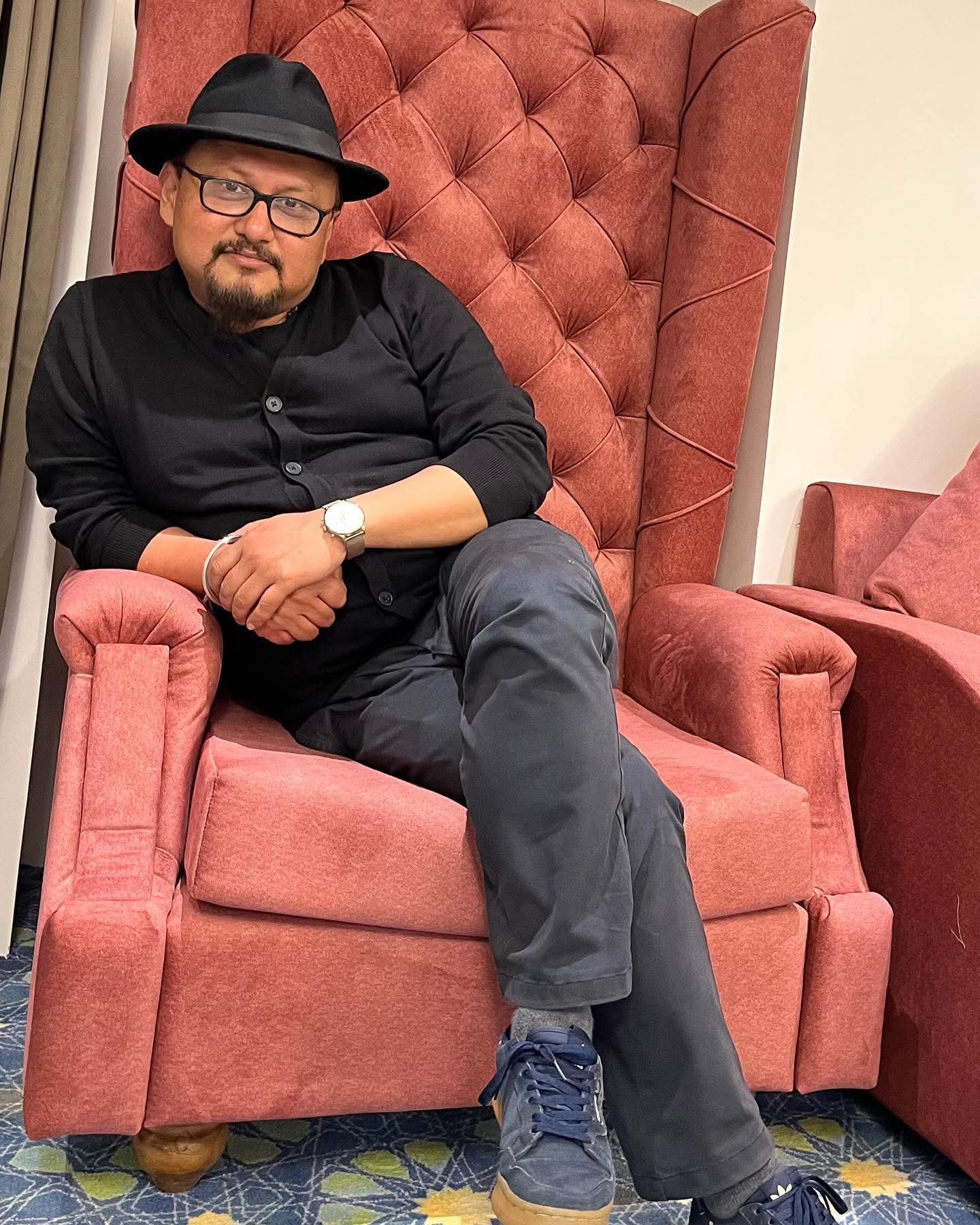
Kicking things off is Dr. Satyadeep S. Chhetri, academician, author and quintessential Siliguri-wala. He teaches at Nar Bahadur Bhandari Government College in Gangtok and divides his time between Sikkim and Siliguri. He is the author of Gorkhaland Diaries: Even Dreams… Uneven Lives and Sikkim: From Autocracy to Half‑Democracy. Here are his reflections on a town that shaped him.
Which part of Siliguri do you call home?
Jyotinagar, near Don Bosco School (Ward No. 41)
How long have you lived in Siliguri?
Since birth—52 years to be precise
You divide your time between Gangtok and Siliguri. Do you still see yourself as a Siliguri boy?
Oh yes of course. Totally. Siliguri is such a place that you can take yourself out of Siliguri but Siliguri can never go out of you. It’s magical.
How would you describe your relationship with the city?
I can proudly say we built Siliguri… rather the town grew with me.
What’s your earliest memory of Siliguri?
A small sleepy town where rickshaws and cycles ruled the streets. Where everyone knew almost everyone, where roads were dotted with small houses rather than big buildings or apartments. Bidhan Market used to be the heart of town where you bought everything you needed. Where Sevoke Road (supposedly ended at Panitanki More) and Hill Cart Road was known for its hotels and restaurants. Haggling for discounts at Eastern Book Depot and NB, watching Jatra and annual circuses in or around Siliguri, cricket and football matches in Ramkrishna Math and Tilak Maidan… and of course the curfew when Indira Gandhi was assassinated in 1984.
What’s a Siliguri phrase, habit, or quirk you think outsiders don’t understand?
“Chherey dey.” Let it go. It’s a problem-solver phrase—used to defuse an argument, stop a fight, or simply say “move on.”
What’s one thing about Siliguri that hasn’t changed, and you wish it doesn’t change ever?
The camaraderie among the old citizens, the few remaining standalone houses, Netaji Cabin, Arya Bakery and Taiwah, Mahabirsthan, food stalls outside the stadium, Ganga Sweets at Children’s Park, shopping in Bidhan Market and Hong Kong Market, watching plays at Town Hall… well, the list is endless.
What do you miss about Siliguri from yesteryears?
Ahh there are so many… many of the landmarks have been broken or converted, the old houses have gone missing, trees have gone missing along Sevoke Road… rather every road. Miss the old Holi, Diwali and Durga Puja (pandal hopping on foot), the long addas (nowadays everyone seems to be busy), squatting in College Maath (now walled and barricaded), Saraswati Puja and Jhulon Puja (this has disappeared), haggling for small discounts at NB Modern Agencies or Eastern Book Depot, having chop and Mughlai parotha at the old Parimal’s Hotel or singara at Sarada Mistanna Bhandar (both closed now). The list is endless… so many… I mean just so many.
What do you like about the new Siliguri?
Siliguri is a nondescript place in India and yet the city is a mix of the old and new. It has everything that a metro has to offer and yet it still has a small-town character.
What do you dislike about Siliguri (past or present)?
Absence of a unique cultural aspect. The politics of religion has made deeper roots into Siliguri. The city is bereft of a proper bookstore or a vibrant cultural hub.
What do you wish to see in Siliguri (happening/taking place/being built) in the years and decades to come?
Siliguri was known to be a traders’/transit town, which it still is. When people visit my place, all I can do is take them outside the town or to the new supposed developmental hotspots like the shopping malls. Siliguri now needs to grow beyond this. There has to be one cultural landmark in Siliguri that defines the city—just like India Gate/Red Fort/Qutub Minar in Delhi or Howrah Bridge/Victoria Memorial in Kolkata. We should create something inside Siliguri that captures its essence.
If Siliguri had a theme song, what would it be—and why?
Main Hoon Na. All said and done, Siliguri is a nerve centre for all the needs—health, education, daily essentials—for Bhutan, Sikkim, Darjeeling, Kalimpong, the Dooars… rather the entire North Bengal and adjoining districts of Bihar.
Something went wrong. Please refresh the page and/or try again.
 Anuradha Sharma