Last year, a colleague of mine told me about a tea planter who had started a school for the deaf and mute at a tea garden in the Dooars. It was one of those “see if you could do a story on it” type of calls that we journalists often get. I am usually wary of NGOs, for obvious reasons. And I am suspicious of tea planters too. Who isn’t? So, I proceeded cautiously. I needn’t have. If anything, it gave me an opportunity to self-reflect.
I first met Harsh Kumar, a former manager at Bagrakote tea estate, and Sanjana Sarkar, an activist, at Uttorayon in Siliguri. Kumar is the founder and Sarkar, the secretary, of Niswarth, an organisation that works with the disabled, especially the hearing impaired. It was while talking to them that I realised how little I know about people living with disabilities, and generally how little we care to understand the world of disabled persons. As a society we only support the able. Our structures are built in a way to cheer ableism, where our drive to empower the disabled is mostly limited to banal platitudes and token measures.
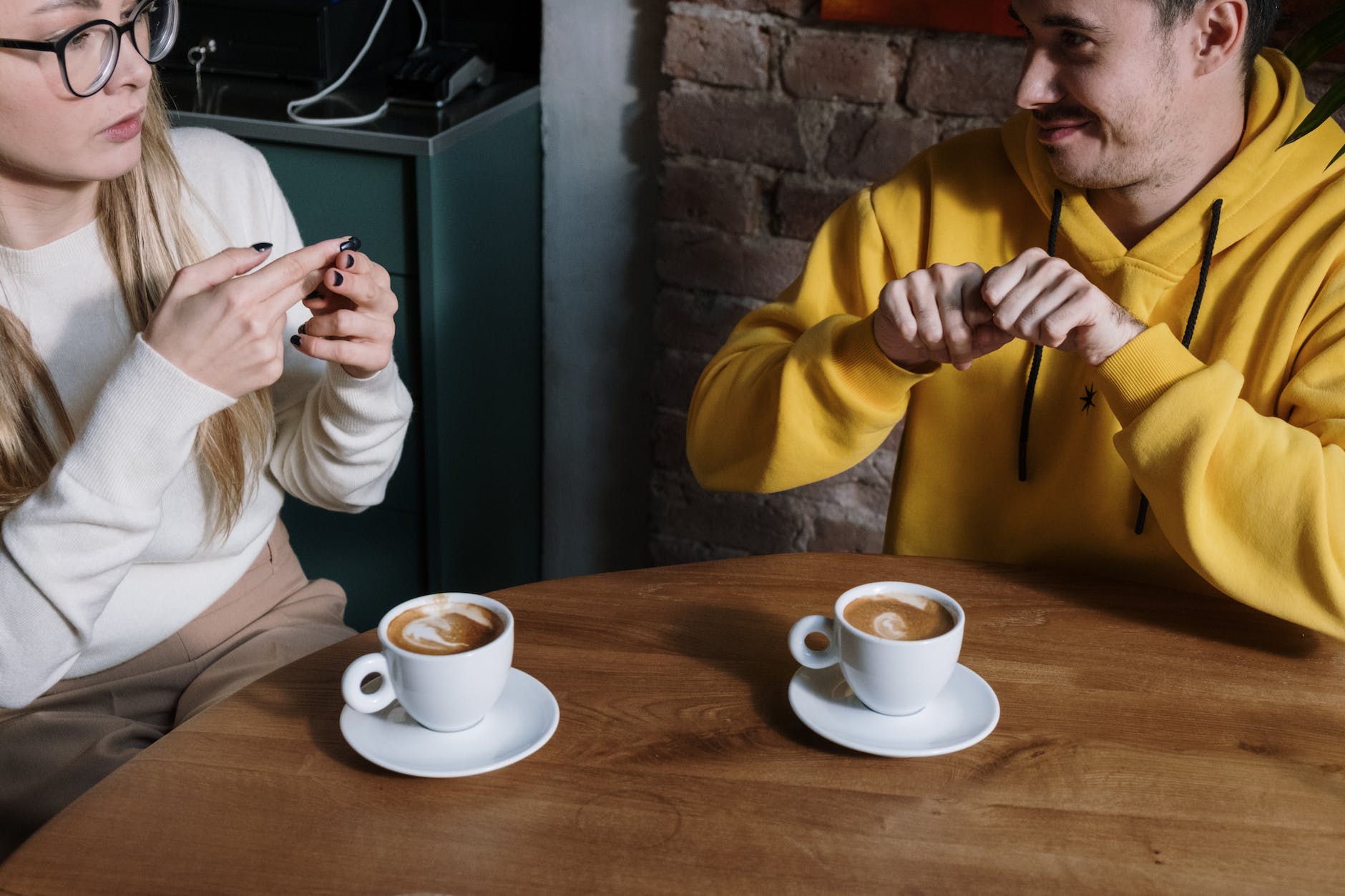
Why don’t we learn the sign language? Why don’t we teach the sign language to kids at school? Why did I, for all my love for languages–I speak in six languages–never consider picking up the sign language? India is home to about 63 million people with significant auditory impairment (deaf and hard of hearing)–the largest number in the world. The sign language will not only help us communicate with them, but it can also act as bridge for all language speakers. It fails me why we, while being so enthusiastic about imposing one spoken-and-written language as the “national language”, trampling over all other languages and dialects, completely ignore the Indian Sign Language. Apart from giving 63 million hearing-impaired people a voice, I don’t see why it cannot also be a non-verbal lingua franca in a country so linguistically and culturally diverse as India.
Learning the sign language not only helps you communicate with people who cannot speak or hear, but also makes you a better listener. Research also says it helps children develop better social and cognitive skills, which in why a growing number of childhood programmes in the US are incorporating the sign language in their curricula. No wonder that American Sign Language speakers are growing in number, and not all of them are deaf.
I spend half an hour everyday brushing up on my French, even though il n’y a pas even a single soul to speak to me in that tongue. I have now decided to devote some time learning Indian Sign Language, which I am sure I will have far more use of. A casual online search has thrown up countless channels on YouTube, my first port of call. You may check them out yourself, here, should you be interested.
In February this year, I travelled to Bagrakote to visit a school for the deaf and mute run by Niswarth, the NGO founded by Harsh Kumar. There, I met the young and dynamic teacher, Loknath Chhetri. I did a story on him and the school for Gaon Connection, a vibrant web portal specialising in rural reporting.
Read the story here.

Born in Birpara in Alipurduar district of West Bengal, Chhetri has been deaf since birth. He studied at The Salvation Army Home and School for the Deaf in Darjeeling, over 150 km away from his home. After matriculation in 2006, he went to CSI Higher Secondary School for the Deaf in Chennai where he finished his Class XII in Commerce. He came back home and acquired a graduate degree in commerce through distance education from Indira Gandhi National Open University in 2016. Apart from learning the Indian Sign Language, he also did a basic course on computers. In 2022, he obtained a Diploma in Education in Special Education (Hearing Impairment) from North Bengal Handicapped Rehabilitation Society with a goal to teach children who like him could not hear or speak, but unlike him did not have the opportunities or means to acquire appropriate education. (Quoted from the Gaon Connection piece linked above.)
 Anuradha Sharma